Why You Feel Hungry After Breakfast If You Have Diabetes
- Posted by Author
- Published on April 17, 2026
- Category Benefit
- No comments
You just ate breakfast…
But within 1–2 hours, you’re hungry again.
Sound familiar?
If you have diabetes, this isn’t just about hunger—it’s often a sign that your blood sugar is rising and crashing too quickly.
The surprising part?
Even “healthy” breakfasts can cause this—especially when they’re not part of a low glycemic breakfast for diabetes.
Let’s break down why this happens—and how to fix it.
What’s Really Causing Your Hunger?
It’s not that you didn’t eat enough.
It’s that your breakfast didn’t keep your blood sugar stable.
Truth:
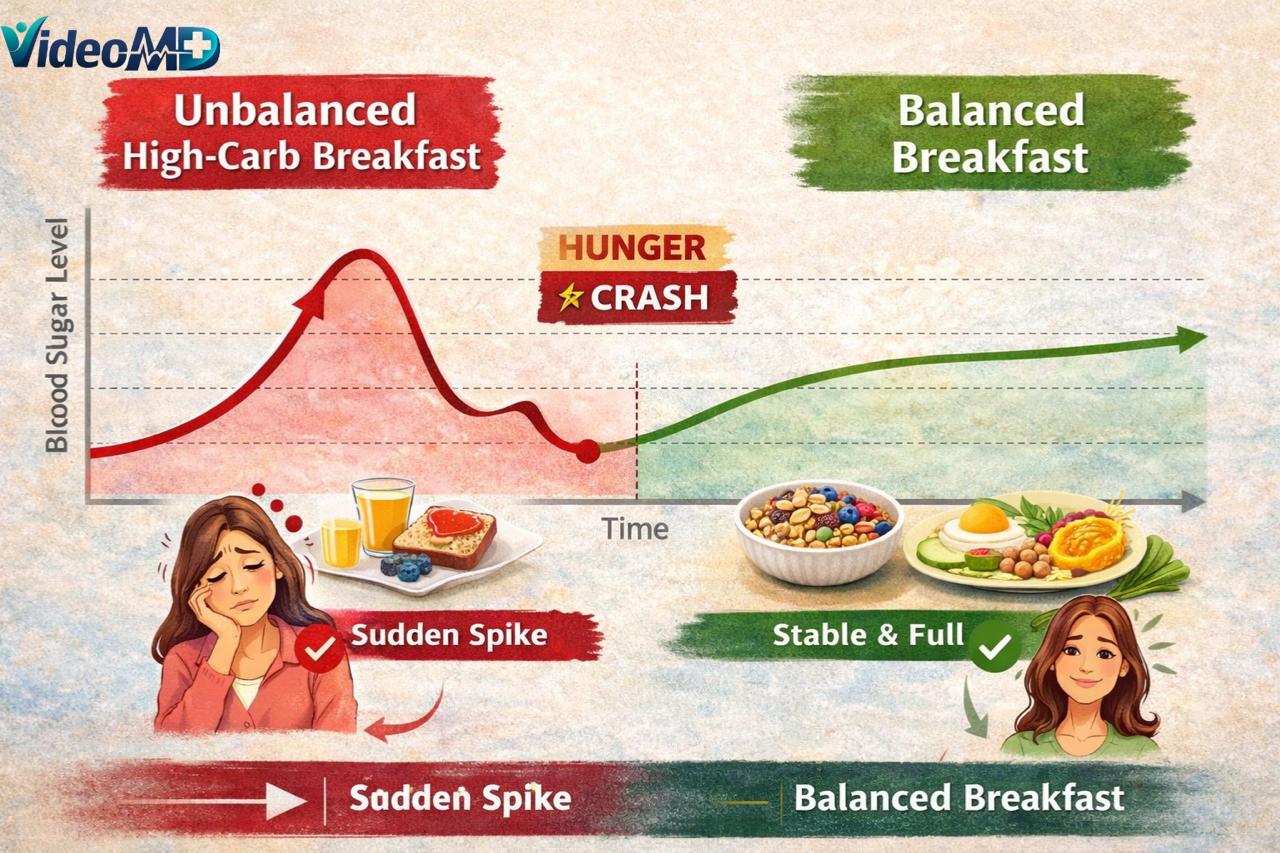
Hunger after eating is often a result of blood sugar spikes followed by rapid drops.
5 Reasons You Feel Hungry After Breakfast
Your Breakfast Is Too High in Carbs
If your meal is mostly:
- Bread
- Cereals
- Oats (without protein)
It digests quickly → causes a spike → then a crash
Result:
- Sudden hunger
- Low energy
2. You’re Drinking Your Calories
Fruit juices, smoothies (without protein), or sweet coffee drinks:
Liquid calories are absorbed faster
Insight:
Liquid sugar leads to faster glucose spikes than whole foods.
3. Hidden Sugars Are Spiking Your Blood Sugar
Even “healthy” foods may contain:
- Honey
- Syrups
- Flavored yogurt
These cause quick glucose spikes
4. You’re Missing Protein
Protein is what keeps you full.
Without it:
- Digestion is faster
- Hunger returns quickly
5. No Healthy Fats in Your Meal
Healthy fats slow down digestion.
Without fats:
Your meal doesn’t “last” in your system
What’s Happening Inside Your Body
Here’s the cycle:
- You eat a high-carb breakfast
- Blood sugar spikes
- Insulin rises
- Sugar drops quickly
- You feel hungry again
Insight:
Blood sugar crashes trigger hunger signals—even if you just ate.
The Simple Fix (That Actually Works)
You don’t need to eat more—you need to eat smarter.
Follow this:
Fiber + Protein + Healthy Fat = Stay Full Longer
What a Filling Breakfast Looks Like
Instead of:
Toast + juice
Try:
Eggs + avocado + whole grain toast
OR
Oats + nuts + chia seeds + berries
3 Quick Fixes You Can Start Tomorrow
1. Add Protein First
Eggs, yogurt, or nuts
2. Stop Liquid Sugar
Replace juice with whole fruit
3. Balance Your Plate
Don’t eat carbs alone
Is This a Diabetes Warning Sign?
It can be.
Frequent hunger after meals may indicate:
- Poor glucose control
- Insulin spikes
- Imbalanced meals
It’s a sign to fix your breakfast, not skip it.
The Bottom Line
Feeling hungry after breakfast isn’t normal—it’s a signal.
Your meal is missing balance.
Add protein
Include healthy fats
Reduce high-GI carbs
Final Thought
If your breakfast isn’t keeping you full, it’s not working for your body.
At video-md.com, we simplify health into practical, everyday choices—so you can take control of your blood sugar without confusion.
It’s not about eating more food, it’s about eating the right combination of food.
Share on :
Related Blogs

Causes of Acne & How to Treat It Effectively,
Get Started Causes of Acne & How to Treat It Effectively Posted by Author Published on December 1, 2024 Category Benefit No comments You’re in your late twenties, eating reasonably well, washing your face every night, and somehow still waking up to a new breakout on your chin like clockwork. If you thought acne was something you’d age out of by now, your skin has news for you. The truth is, acne in adults is far more common than anyone talks about, and it’s almost

How Online Dermatology Is Finally Changing Eczema Care
You’re mid-flare, your skin is on fire, and the earliest dermatologist appointment you can find is five weeks away,

How AI Predicts Blood Sugar Changes Before They Become Dangerous
Early detection of blood sugar changes is critical to the successful management of diabetes. Artificial intelligence (AI) is currently changing the process of managing diabetes by forecasting glucose changes before they escalate to dangerous threats to health.

How Remote Patient Monitoring Helps Control Blood Sugar Levels at Home
Effective management of diabetes involves regular checkups, medical advice, and lifestyle changes. With the advent of Remote Patient Monitoring (RPM) technology, patients are now able to monitor their blood sugar levels at home and have continuous communication with their healthcare providers without necessarily going to healthcare institutions.

Online Dermatology vs Traditional Visits: Which Is Worth Your Time and Money?
You noticed something off with your skin three weeks ago, Googled it (bad idea), panicked a little, and then discovered the

Smart Diabetes Care Without Clinic Visits Using Video-MD
The management of diabetes has to be done without visiting the hospital regularly. Due to the progress of telehealth technology, patients are now able to measure blood sugar levels, meet with doctors, and modify treatment plans from the comfort of their home.
Video MD
Personalized Video Consultations