The management of diabetes is an issue that frequently creates a significant question: Is it better to see a primary care doctor or visit an endocrinologist? And as telehealth increases access to care, does virtual specialist care matter?
It depends on your condition, treatment needs, and my ability to control my blood sugar. Let’s break it down clearly.
What Does a Primary Care Doctor Do for Diabetes?
The first line of care in the diagnosis and treatment of type 2 diabetes normally involves a primary care physician (PCP).
They typically:
- Order blood sugar and HbA1c tests
- Prescribe oral medications or insulin
- Monitor cholesterol and blood pressure
- Provide lifestyle counseling
- Coordinate referrals if needed
A primary care physician can treat patients with stable and well-controlled diabetes.
The Centers for Disease Control and Prevention considers continuous observation and prophylactic care as critical components of managing diabetes, which may be offered by primary care providers.
What Is the Work of an Endocrinologist?
An endocrinologist is one who deals with diseases concerning hormones, such as diabetes. They have taken a further step in training in dealing with complicated or hard-to-control cases.
An endocrinologist may be helpful if:
- Blood sugar remains uncontrolled
- You require multiple insulin adjustments
- You have type 1 diabetes
- You experience frequent hypoglycemia or hyperglycemia
- You develop diabetes-related complications
The American Diabetes Association notes that specialist care may be beneficial when treatment goals are not being met with standard therapy.
Virtual Endocrinologist: How Telehealth Changes the Game
Traditionally, seeing an endocrinologist meant long wait times and travel. Virtual care now makes specialist access faster and more convenient.
Benefits of a Virtual Endocrinologist:
- Faster appointment scheduling
- Ongoing glucose monitoring review
- Easier medication adjustments
- Reduced travel time
- Greater flexibility for busy schedules
Telehealth is particularly helpful for patients who need frequent insulin titration or close follow-ups.
When Is a Primary Care Doctor Enough?
A PCP may be sufficient if:
- Your HbA1c is within the target range
- You take oral medication only
- You do not have major complications
- You need routine monitoring and preventive care
For stable patients, primary care remains effective and convenient.
When Is an Endocrinologist Better?
You may benefit from an endocrinologist if:
- You use an insulin pump
- You have type 1 diabetes
- You struggle with unpredictable glucose levels
- You need advanced medication regimens
- You have thyroid or hormonal conditions alongside diabetes
The Mayo Clinic explains that complex diabetes cases often require specialist involvement for optimal control.
So, who is better?
There isn’t a universal answer. It depends on your diabetes severity and treatment complexity.
✔ Mild to moderate, stable diabetes → Primary care may be sufficient
✔ Complex or uncontrolled diabetes → Endocrinologist may provide better outcomes
Collaborative care is often the most effective option, i.e., a PCP and an endocrinologist cooperate.
Access to both of these options is made by Virtual Care.
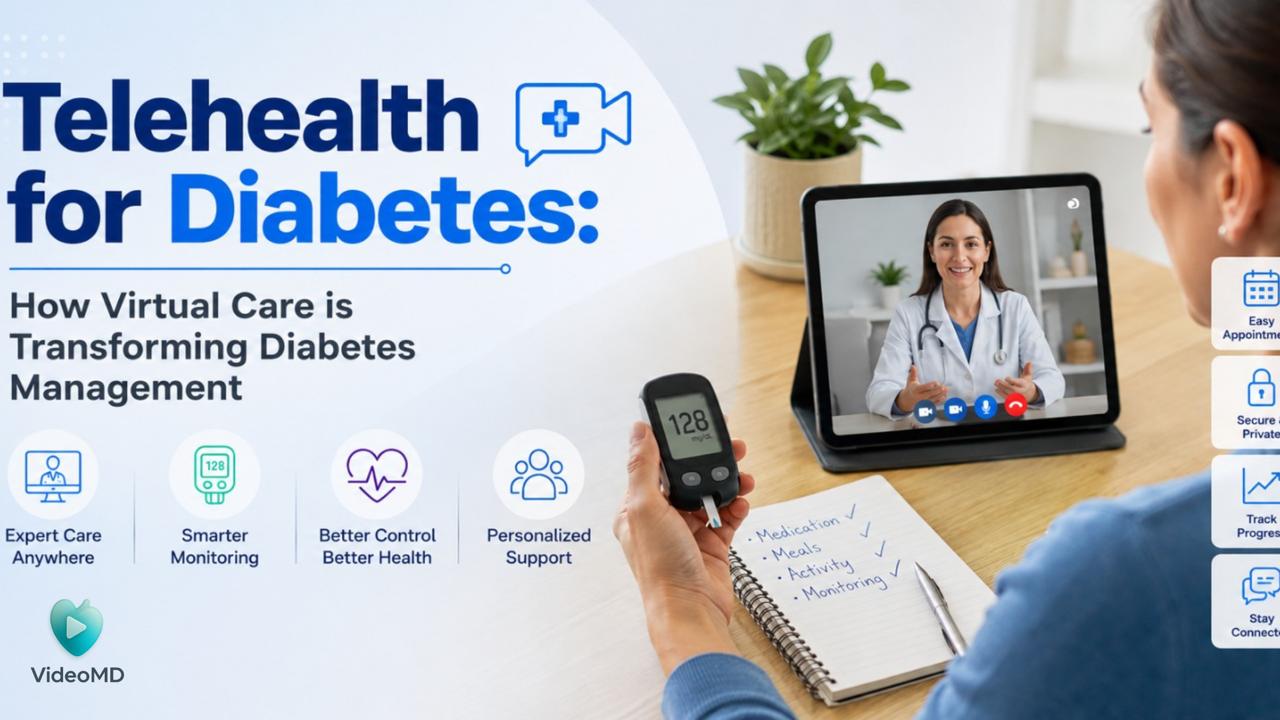
Under Video-MD, patients have an opportunity to communicate with licensed physicians online to examine diabetes and modify medications, and to keep in touch with a doctor. Through virtual consultations, it can conduct timely follow-ups without lengthy clinic waiting periods, which prevents complications before they develop.
Online access to care helps in the middle between usual primary care and specialist assistance—it provides flexibility and continuity in managing diabetes.
Primary care physicians and endocrinologists are both critical to diabetes care. In the case of stable cases, primary care might suffice. In complicated or hard-to-treat diabetes, an endocrinologist (particularly through telehealth) can offer more advanced expertise and closer attention.
It is not about picking what is better, but rather about picking the type of care that is best suited to your health needs. It is a perfect possibility to control diabetes with appropriate medical advice and regular check-ups.