
Type 1 Diabetes: What It Is, Causes, Symptoms & Treatment
- Posted by yip
- Published on December 1, 2024
- Category Benefit
- No comments
Type 1 diabetes is an auto immune chronic disease which implies the body inability to produce insulin. It is not lifestyle-related and usually occurs in childhood or young adulthood though it can be diagnosed at any age unlike Type 2 diabetes. As the level of awareness and online access to telehealth and online doctor consultation rises, the management of Type 1 diabetes is now easier and more continuous than ever before.
What Is Type 1 Diabetes?
The causes of type 1 diabetes are the false attack and destruction of the insulin-producing beta cells of the pancreas by the immune system. Insulin is a hormone that assists glucose (sugar) to be introduced into cells so that it can be used as energy.
Without insulin:
- Blood sugar levels rise
- Cells are unable to access energy
- Long‑term complications may develop if untreated
People with Type 1 diabetes require lifelong insulin therapy and regular medical monitoring.
Causes of Type 1 Diabetes
The exact cause of Type 1 diabetes is still unknown, but several factors are believed to contribute:
- Autoimmune reaction damaging pancreatic cells
- Genetic predisposition (family history)
- Environmental triggers, such as viral infections
- Immune system malfunction
Type 1 diabetes is not caused by sugar intake, obesity, or lack of exercise.
Common Symptoms of High Blood Sugar
Early recognition of symptoms of high blood sugar is essential for timely diagnosis and treatment.
Typical symptoms include:
- Frequent urination
- Excessive thirst
- Increased hunger
- Unexplained weight loss
- Fatigue and weakness
- Blurred vision
- Dry mouth
- Slow‑healing wounds
- Irritability or mood changes
Severe symptoms may include:
- Nausea or vomiting
- Abdominal pain
- Fruity‑smelling breath
- Rapid breathing
- Confusion or drowsiness
If these symptoms appear suddenly, immediate medical attention is required.
How Type 1 Diabetes Is Diagnosed
Doctors diagnose Type 1 diabetes using:
- Fasting blood glucose test
- Random blood sugar test
- HbA1c test
- Autoantibody testing
- Urine ketone testing
Many patients today begin their diagnosis journey through an online doctor consultation, followed by lab testing when needed.
Treatment Options for Type 1 Diabetes
There is currently no cure, but effective treatment helps people live long, healthy lives.
1. Insulin Therapy
- Multiple daily insulin injections
- Insulin pump therapy
- Long‑acting and rapid‑acting insulin combinations
2. Blood Sugar Monitoring
- Finger-stick glucose testing
- Continuous glucose monitoring
3. Nutrition & Lifestyle Support
- Balanced carbohydrate intake
- Meal planning support
- Physical activity guidance
4. Regular Medical Follow‑Ups
Insulin dose adjustments
Review of glucose trends
Prevention of complications
Telemedicine allows patients to receive continuous care without frequent clinic visits.
Role of Online Telehealth in Diabetes Care
Online telehealth has transformed diabetes management by providing:
- Quick access to licensed doctors
- Same‑day online doctor consultation
- Ongoing insulin management
- Medication refill support
- Review of glucose readings remotely
- Nutrition and lifestyle counseling
Patients no longer need to wait weeks for appointments or travel frequently to clinics.
Benefits of Online Doctor Consultation for Type 1 Diabetes
Living Well With Type 1 Diabetes
- Convenient access from home
- Faster response to blood sugar fluctuations
- Continuous monitoring support
- Reduced hospital visits
- Ideal for long‑term chronic care
- Better treatment adherence
Telehealth is especially helpful during illness, travel, or sudden glucose changes.
Possible Complications If Not Controlled
Poorly managed diabetes may lead to:
- Heart disease
- Kidney damage
- Nerve damage
- Eye problems (retinopathy)
- Foot complications
Regular virtual follow‑ups help detect and prevent these risks early.
With proper medical care, technology, and education, people with Type 1 diabetes can:
- Maintain stable blood sugar levels
- Stay physically active
- Work, travel, and live normally
- Prevent long‑term complications
Consistent care — not occasional treatment — is the key to success.
When to See an Online Doctor Immediately
Seek urgent consultation if you experience:
- Persistent high blood sugar readings
- Symptoms of diabetic ketoacidosis (DKA)
- Frequent hypoglycemia episodes
- Vomiting or dehydration
- Sudden insulin resistance
An online doctor consultation can guide emergency care decisions promptly.
Final Thoughts
Diabetes type 1 is something that people have to live with, but with an appropriate treatment regimen and frequent examination of the condition, it is possible to control. The current development in online telehealth is enabling a patient to get constant medical care, insulin education, and lifestyle coaching – all at the convenience of the home.
When there are signs of high sugar level or any other loved one requires continuous monitoring of diabetes, meeting with a skilled physician via telemedicine may be very effective.
Share on :
Related Blogs

Acne Skincare Tips for Teenagers: A Guide to Clearer Skin
Get Started Acne Skincare Tips for Teenagers: A Guide to Clearer Skin Posted by Video-md Editorial Team Published on June26, 2026 Category Benefit No comments If your teenager has tried every face wash on the drugstore shelf and their skin still won’t cooperate, you’re not alone. Acne hits almost 85% of teens at some point, and for a lot of families, getting to an in-person dermatologist isn’t easy. School schedules, sports practice, and long waitlists it adds up fast. That’s where online acne treatment for

Summer Telehealth: Your Complete Guide to Seeing a Doctor Online This Season
Summer in the United States brings sunshine, road trips, outdoor festivals — and a predictable wave of health concerns. From heat exhaustion and sunburns to travel diarrhea and allergy flare-ups, millions of Americans need medical attention between June and August. The challenge? Clinics are packed, wait times spike, and nobody wants to spend a sunny afternoon in an urgent care waiting room.

Can I Get Birth Control Online Without a Physical Exam?
For decades, getting a birth control prescription meant booking a GP or gynaecology appointment, waiting weeks, going in for a pelvic exam you may not have felt was necessary, and then — finally — getting the prescription you needed in the first place.

Can a Virtual Dermatologist Treat Hormonal Acne?
Hormonal acne has a way of showing up at the worst possible time. Right before a big event, right after you thought you’d outgrown breakouts, or like clockwork every month around the same week. If you’ve been Googling “virtual dermatologist for hormonal acne”

How to Get Rid of Acne Fast: What a Virtual Dermatologist Will Recommend
Let’s be honest: “get rid of acne fast” is one of those phrases that sounds great in a Google search and almost impossible in real life. Acne doesn’t disappear overnight, no matter how many serums you stack on your bathroom shelf.
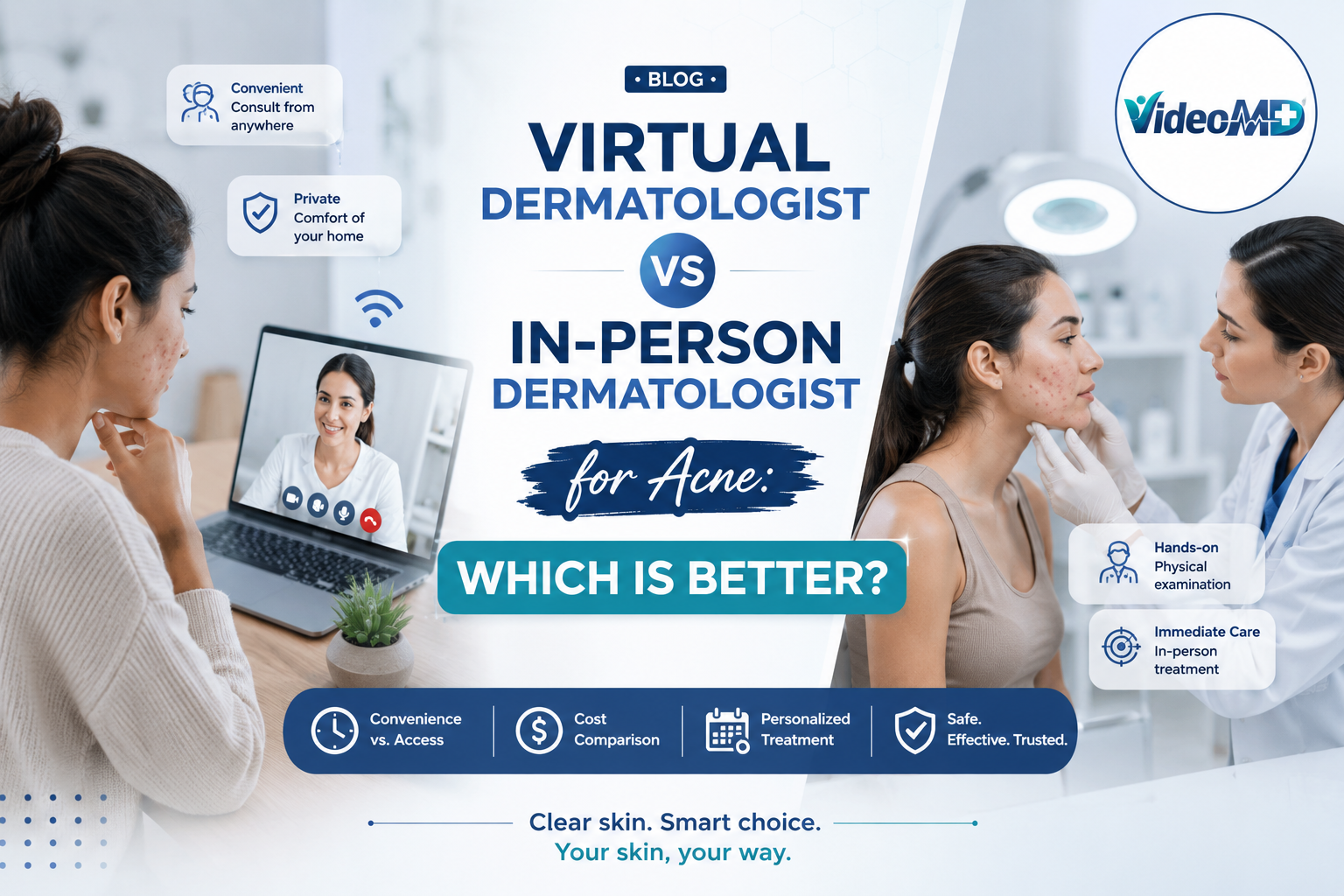
Virtual Dermatologist vs In-Person Dermatologist for Acne: Which Is Better?
If you’ve ever sat in a dermatology waiting room for 45 minutes just to get 7 minutes with the doctor, you already know why so many people are switching to virtual care. But when it comes to acne specifically, is a video visit actually as good as the real thing?
Video MD
Personalized Video Consultations