Let’s be honest losing weight is hard enough without having to fight traffic, sit in a waiting room, and then explain your entire health history to a doctor who’s glancing at the clock every three minutes.
That frustration is exactly why so many people are now turning to telehealth weight management as a real, clinically backed alternative to traditional care. But is it the right fit for everyone? And what does in-person treatment still do better?
If you’ve been going back and forth on this, you’re not alone. Here’s a straight-talking breakdown to help you figure out what actually makes sense for your situation.
The Rise of Telehealth for Weight Loss And Why It's Sticking Around
Telehealth didn’t just survive the pandemic. It genuinely changed how people access medical care including obesity treatment. What started as a convenience became, for many patients, a preferred way to manage their health.
Today, working with an online doctor for weight loss isn’t some second-tier option. You’re often talking to board-certified physicians, dietitians, and behavioral health specialists who review your labs, adjust your medications, and check in on your progress all without you ever leaving your kitchen.
For people who live in rural areas, work irregular hours, have young kids, or simply feel embarrassed walking into a weight loss clinic, this access matters enormously. It removes a layer of friction that, for some, was the only thing standing between them and getting help.
What Telehealth Weight Management Actually Looks Like
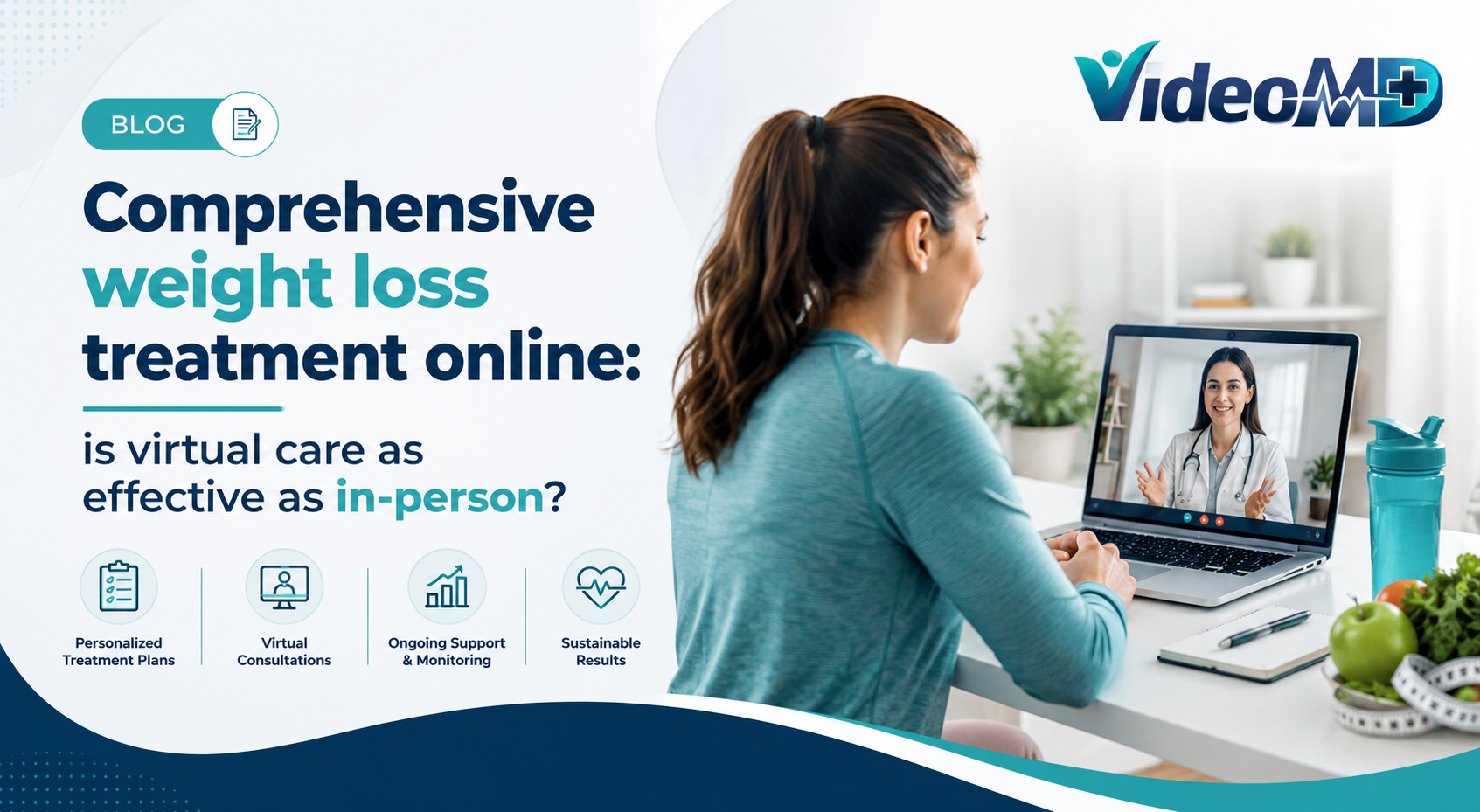
Here’s something that surprises a lot of people: telehealth obesity care isn’t just a quick video call where someone tells you to “eat less and move more.” A legitimate online weight loss clinic offers structured, personalized programs that can include:
- Comprehensive metabolic and hormonal lab work (done at a local lab near you)
- Prescription medications, including GLP-1 receptor agonists like semaglutide or tirzepatide
- Ongoing check-ins with a virtual weight loss doctor who tracks your data and adjusts your plan
- Nutritional coaching and behavioral support
- Access to messaging between appointments so small issues don’t become big setbacks
The clinical rigor, in other words, can be just as serious as what you’d find in a brick-and-mortar office. What changes is the delivery.
Where Telehealth Has a Clear Advantage
Consistency. One of the biggest reasons people fall off weight loss plans is that life gets in the way. A sick kid, a demanding work week, a canceled appointment and suddenly you’ve gone six weeks without seeing your provider. Telehealth makes it dramatically easier to stay connected.
Comfort and privacy. For people who carry shame around their weight and many do, because diet culture has been brutal for decades talking to a doctor from the privacy of your own home can make it easier to be honest. Honest conversations lead to better care.
Cost and access. Not every city has an obesity medicine specialist online or off. If you live somewhere without specialized providers, telehealth may be your only realistic option for evidence-based obesity treatment rather than generic advice from a general practitioner who sees weight loss as a side issue.
Frequency. Telehealth often allows for shorter, more frequent touchpoints. Instead of a 45-minute in-person appointment every three months, you might have a 15-minute video check-in monthly, plus async messaging in between. For some patients, that ongoing connection is more effective.
When In-Person Care Makes More Sense
Telehealth isn’t for everyone, and it’s worth being clear about where it has limits.
If you have complex, overlapping health conditions think severe cardiovascular disease, active eating disorders, significant mobility limitations, or a history of surgical complications in-person care offers something telehealth genuinely can’t replicate: hands-on physical assessment. A doctor who can examine you directly catches things that don’t always show up in a video call or lab report.
Bariatric surgery is another area where in-person care is non-negotiable. The evaluation, procedure, and post-surgical monitoring all require a physical presence. If surgery is on your radar, you’ll need a team you can see face-to-face.
There’s also the question of personal preference. Some people simply do better with in-person accountability. The act of showing up somewhere, sitting across from a real person, and being physically present in a clinical setting creates a psychological weight that video calls don’t always match. That’s not a failure of telehealth it’s just human variation, and it’s worth honoring.
The Hybrid Approach: What Most People Are Moving Toward
So, Which Is Right for You?
Ask yourself a few honest questions:
- How complex is my health situation? Do I have comorbidities that need hands-on monitoring?
- How consistent am I with appointments when they require travel and scheduling?
- Do I feel more comfortable being open about my health in a private, remote setting?
- Do I live in an area with accessible, specialized obesity care?
- Am I considering or already pursuing surgical options?
If your situation is medically complex or surgery is involved, start with an in-person specialist. If access, consistency, privacy, or flexibility are your main concerns and your health allows it telehealth weight management is a genuinely excellent path forward.