Telehealth for Type 1 Diabetes: Virtual Support for Lifelong Management | Video-MD
- Posted by Video-MD Editorial Team
- Published on May 15, 2026
- Category Benefit
- No comments
Type 1 diabetes doesn’t follow a schedule. It doesn’t take weekends off. Telehealth offers the round-the-clock expert access that this demanding condition has always deserved.
Why Type 1 Diabetes Is Different — And Why That Makes Telehealth More Important
Unlike type 2 diabetes, which often develops gradually and can sometimes be managed with lifestyle changes, type 1 is an autoimmune condition requiring lifelong insulin therapy. There is no remission. Every day involves decisions about insulin dosing, carbohydrate counting, activity adjustment, and managing the unpredictable — illness, stress, hormonal changes, and more.
For people managing this level of complexity, the gap between quarterly clinic visits isn’t a mild inconvenience — it’s weeks or months of navigating changes without expert guidance. Telehealth fills that gap.
Insulin Pump and Closed-Loop System Management via Telehealth
Automated insulin delivery (AID) systems — sometimes called closed-loop or artificial pancreas systems — represent the cutting edge of type 1 diabetes technology. These devices use CGM data and algorithms to adjust basal insulin delivery automatically.
Virtual endocrinologists and diabetes educators with pump expertise can review AID system settings, troubleshoot alarms, help patients optimise their profiles, and provide guidance on new device transitions — all via telehealth.
Telehealth for Children and Adolescents with Type 1 Diabetes
Parents of children with type 1 diabetes face a unique burden — they must make clinical decisions around the clock for a child who cannot yet manage the condition independently. Telehealth gives these families access to pediatric endocrinologists without the stress of taking a sick or dysregulated child to a clinic.
For teenagers, virtual visits often feel more comfortable than in-person appointments — reducing the anxiety that sometimes causes adolescents to avoid addressing their diabetes honestly with providers.
Managing Type 1 Diabetes Emergencies with Telehealth Triage
While telehealth is not a substitute for emergency care, it can play a valuable triage role. A telehealth provider can quickly assess whether a patient’s symptoms warrant an ER visit or can be safely managed at home with guidance — potentially preventing unnecessary emergency room trips while ensuring that genuinely dangerous situations receive appropriate escalation.
Mental Health and Diabetes Distress in Type 1 Management
The psychological burden of type 1 diabetes — sometimes called diabetes distress — is significant. Living with a condition that demands constant attention, that never forgives a mistake, and that carries serious long-term risks takes a real mental health toll.
Integrated telehealth care can bring psychologists and mental health counsellors into the diabetes care team without requiring separate referrals and appointments at separate locations — a genuine improvement in holistic care delivery.
Connect with a Specialist on Video-MD
Video-MD offers specialized telehealth consultations for adults and adolescents with type 1 diabetes—including CGM and AID system reviews. Book at video-md.com.
TECHNOLOGY NOTE Telehealth platforms that integrate with CGM data portals can display AID system data alongside glucose trends, giving the provider full visibility into both the automated decisions and the patient’s manual interventions. |
Related Blogs

A Guide On Preparing Your Child for a Telehealth Appointment
A practical, parent-friendly guide to making virtual pediatric visits easy, calm, and effective Telehealth for children pediatrics has completely changed the way families access medical care no more scrambling for parking, no waiting room meltdowns, and no pulling kids out of school for a quick check-in.

Can a Telehealth Doctor Prescribe Antibiotics? What You Actually Need to Know
You have a sore throat that has lasted four days. Or a burning sensation that tells you it is probably a UTI — again. Or a sinus infection that has settled in for the week. You know you need antibiotics. What you do not want is a two-week wait for a GP appointment or three hours in an urgent care waiting room.
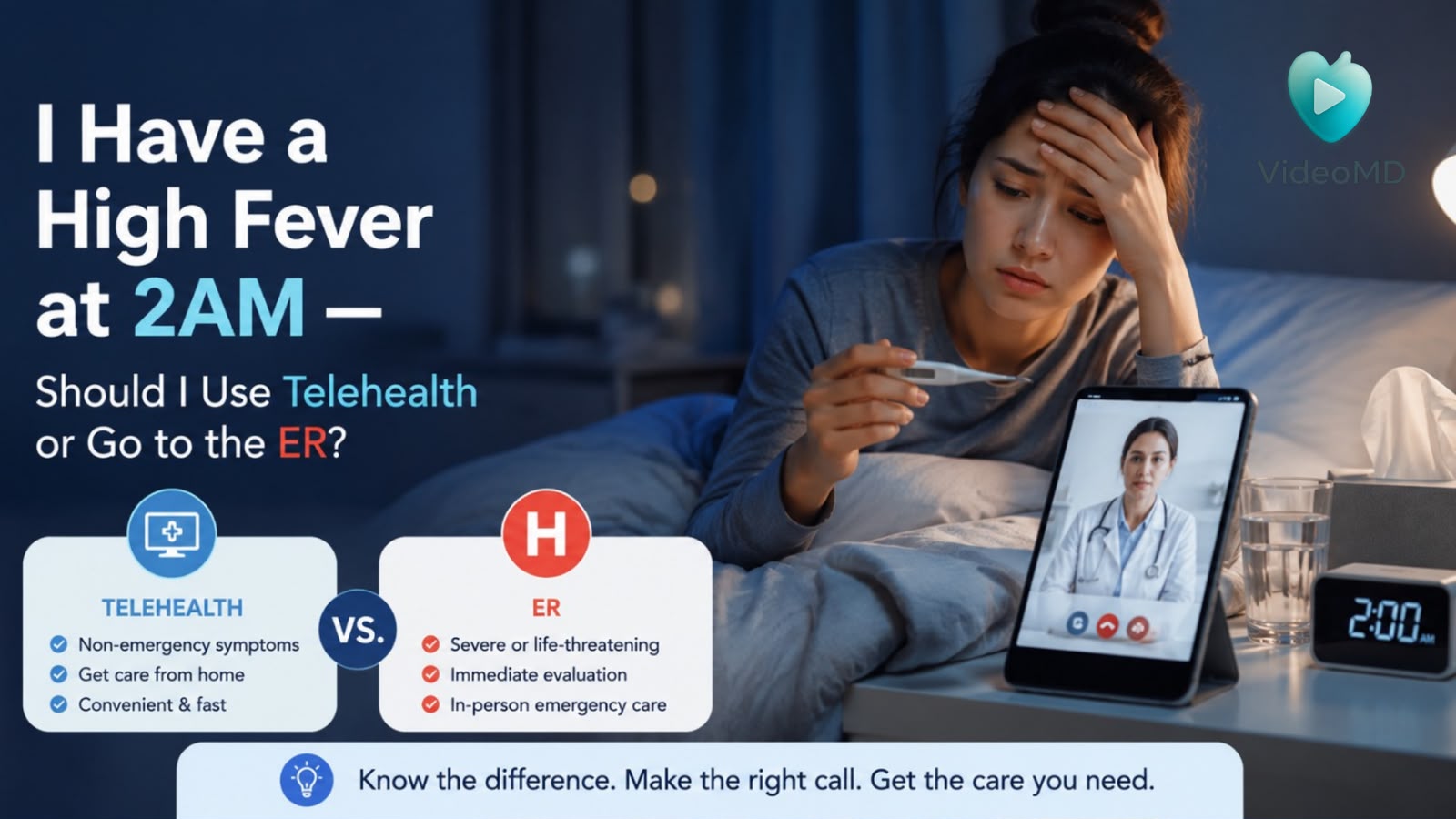
I Have a High Fever at 2 AM—Should I Use Telehealth or Go to the ER?
It is 2AM. Your temperature reads 103°F. You feel terrible — chills, aching, headache — and you are staring at the ceiling wondering whether you need to drag yourself to an emergency room or whether this is something that can wait for morning.
Complete Guide to Telehealth for Children: Virtual Pediatric Care Explained
Getting a sick child dressed, buckled into a car seat, and into a pediatrician’s office is nobody’s idea of a good morning. And yet, for decades, that was the only option.
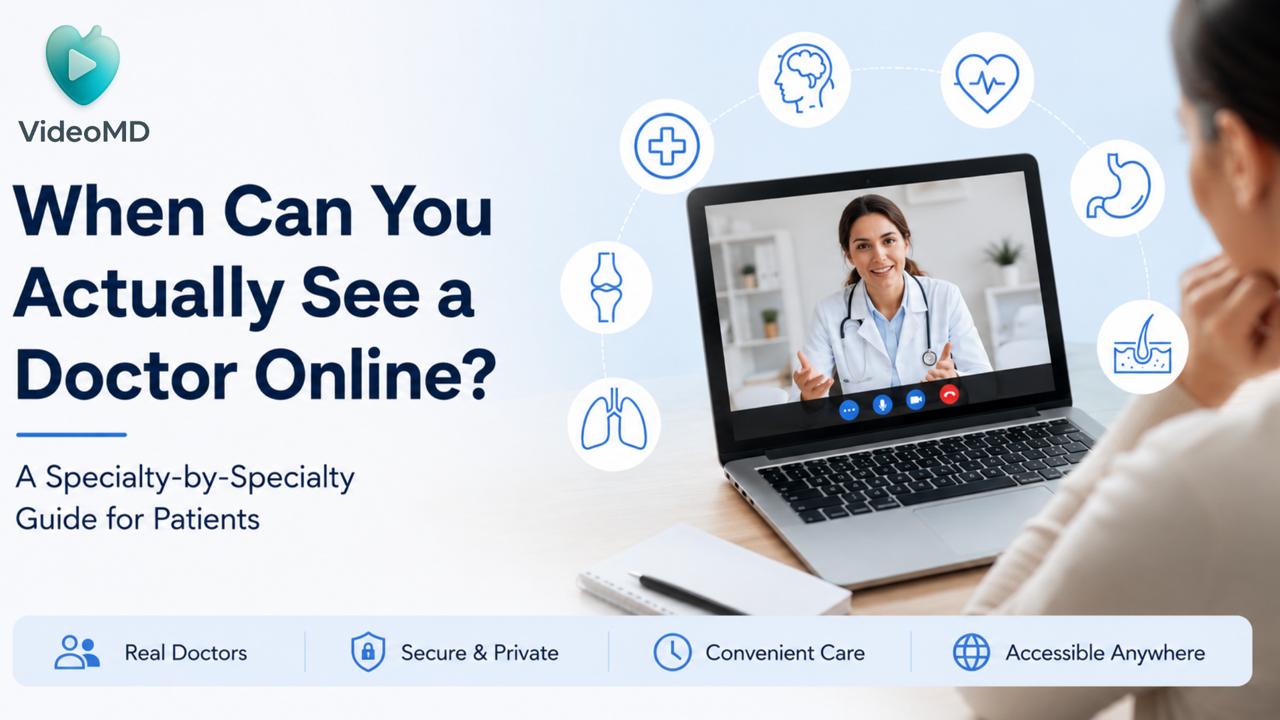
When Can You Actually See a Doctor Online? A Specialty-by-Specialty Guide for Patients
You have a sore throat at 11PM. Your child woke up with a rash. You have been managing your blood pressure for years and just need a medication refill. In all of these situations, you might be wondering the same thing: do I really need to go in person for this?
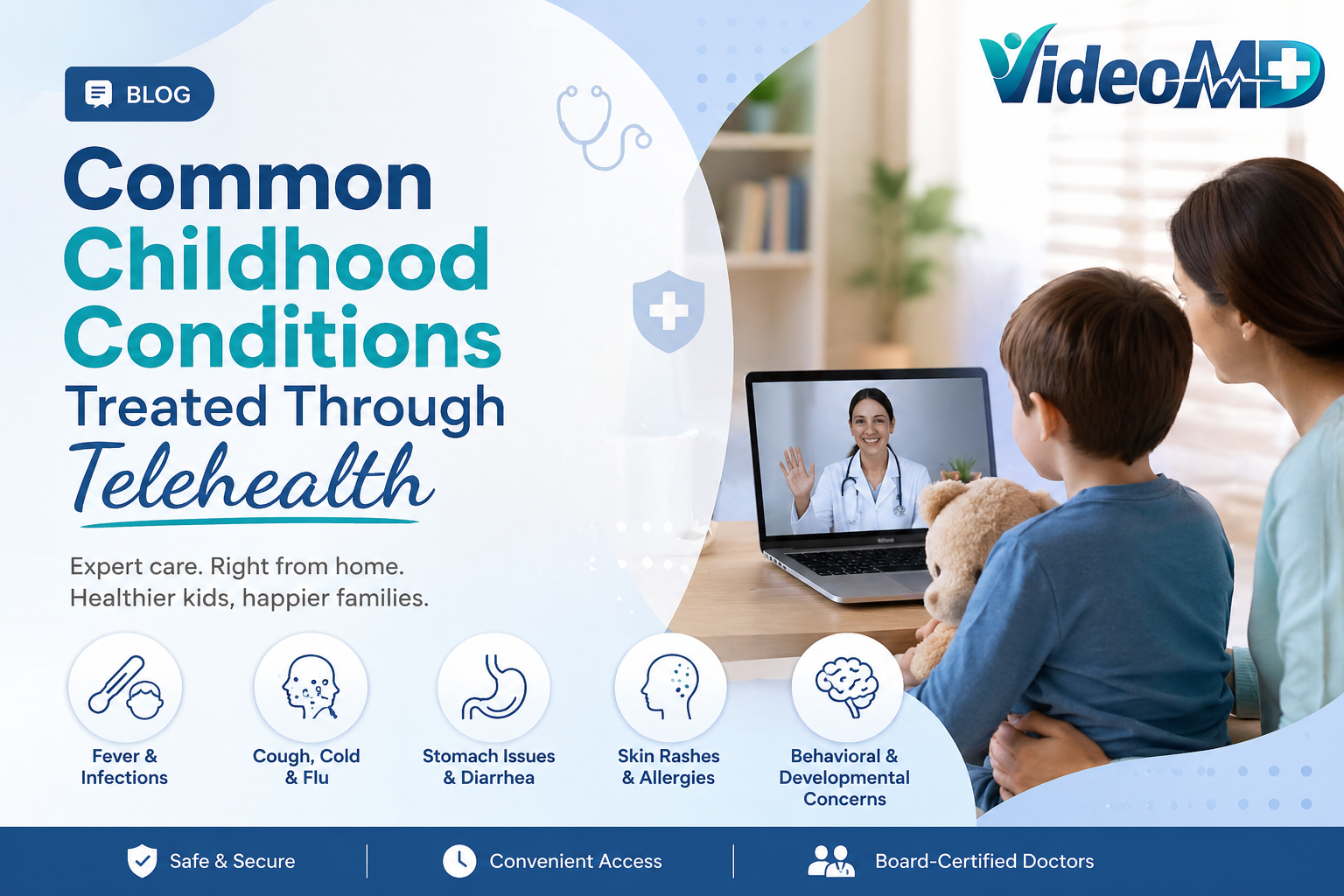
Common Childhood Conditions Treated Through Telehealth For Children
Kids get sick constantly. One week it’s a runny nose, the next it’s an ear that won’t stop hurting. For parents, that often means scrambling to get an appointment, sitting in a waiting room full of other sneezing toddlers, and completely rearranging the day.
Video MD
Personalized Video Consultations