The Diabetes Management Challenge — And Why It Demanded a Better Solution
Diabetes is one of the most demanding chronic conditions to live with. Whether someone is managing type 1, type 2, or gestational diabetes, the condition doesn’t take a day off. Blood glucose fluctuates with stress, sleep, diet, exercise, and even the weather. The traditional healthcare model — a quarterly visit to an endocrinologist — simply wasn’t designed for a condition that needs constant attention.
Consider the reality for a working parent with type 2 diabetes living in a rural town. Getting to a specialist clinic might mean a half-day off work, travel costs, and a waiting room visit — only to spend 15 minutes with a doctor who reviews numbers from a logbook. It’s a system that leaves patients feeling unheard and undertreated.
Telehealth for diabetes didn’t emerge to replace physicians. It emerged to fill the enormous gap between clinic visits — and in doing so, it has fundamentally shifted how diabetes management works.
What Telehealth for Diabetes Actually Looks Like
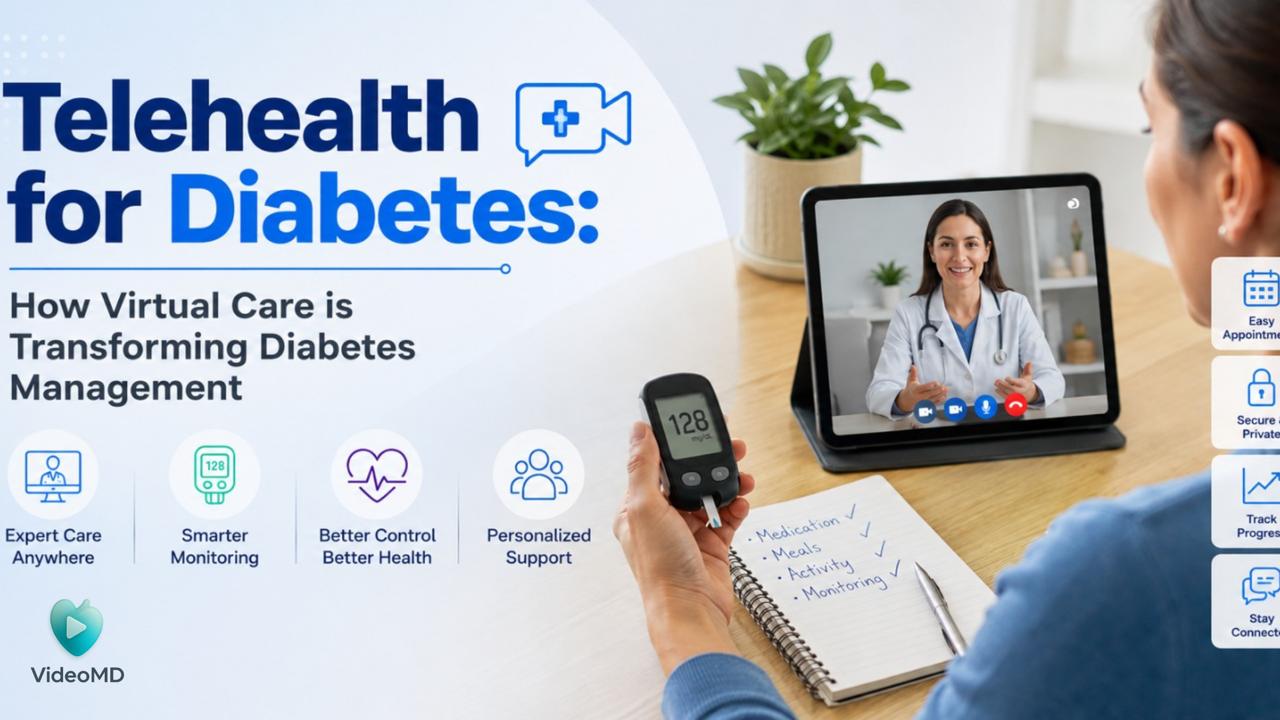
Virtual diabetes care is far more than video calls with a doctor. The modern telehealth ecosystem for diabetes involves a layered set of technologies and services working in concert.
Remote Glucose Monitoring and Continuous Data Sharing
Continuous glucose monitors (CGMs) like Dexterity and Freestyle Libre now transmit real-time blood sugar data to both patients and care teams simultaneously. A virtual endocrinologist can review a patient’s glucose trends from the past two weeks before a scheduled video consultation — arriving at the call already equipped with insights that used to take multiple in-person visits to gather.
Video Consultations with Endocrinologists and Diabetes Educators
At the core of telehealth for diabetes is the ability to meet with qualified specialists without leaving home. Platforms like Video-MD connect patients to board-certified endocrinologists, certified diabetes care and education specialists (CDCES), and registered dietitians via secure video. A patient can discuss medication adjustments, review their glucose patterns, ask questions about symptoms, and get prescriptions — all in a single 30-minute video session.
This matters enormously for people in underserved areas where endocrinology expertise is scarce, for elderly patients with mobility challenges, or for anyone whose schedule previously made consistent specialist care impractical.
Asynchronous Care and Secure Messaging
Not every question warrants a full video appointment. Telehealth platforms increasingly offer asynchronous care — the ability to send a message to your care team, upload a photo of a wound that isn’t healing, or flag an unexpected glucose spike — and receive a clinical response within hours. This kind of low-friction access dramatically increases how often patients actually engage with their care team.
The Real Benefits of Virtual Diabetes Care

| Care from homeNo travel, no waiting rooms—consult specialists from wherever is most comfortable. |

| Data-driven decisionsCGM and wearable data give providers a fuller picture than a quarterly snapshot ever could. |

| More frequent touchpointsVirtual visits are easier to schedule, meaning patients stay engaged between major milestones. |

| Faster medication adjustmentsProviders can adjust insulin doses or prescriptions remotely without waiting for an in-person slot. |

| Dietitian accessNutrition counseling — one of the most impactful interventions for diabetes — is far easier to access virtually. |

| Mental health supportDiabetes distress is real. Telehealth makes it easier to integrate mental health support into diabetes care plans. |
Telehealth and Type 1 Diabetes: Lifelong Management Made More Livable
For people with type 1 diabetes, management is not a lifestyle adjustment — it is a lifelong, round-the-clock medical necessity. Insulin dosing, carb counting, pump adjustments, and hypoglycemia management require constant vigilance. Telehealth doesn’t replace the insulin or the technology — it replaces the friction that surrounds accessing good care.
Parents of children with type 1 diabetes, in particular, have embraced virtual care. Being able to reach a pediatric endocrinologist on a Tuesday evening when a child’s blood sugar won’t stabilize — without going to an emergency room — is not a minor convenience. It’s potentially lifesaving reassurance backed by clinical expertise.
Type 2 Diabetes: Where Telehealth Is Making the Biggest Dent
The numbers for type 2 diabetes are staggering. Over 90% of all diabetes cases are type 2, and many of those affected face significant barriers to consistent specialist care — income, geography, transportation, and time chief among them. Telehealth for type 2 diabetes has emerged as one of the most effective tools for closing that access gap.
Digital therapeutic programs — structured, app-based curricula covering blood sugar management, dietary changes, physical activity, and stress reduction — have been shown to produce clinically meaningful reductions in HbA1c levels when combined with virtual coaching and medical oversight. These programs scale in ways that in-person care simply cannot.
Remote Medication Management
Type 2 diabetes often involves multiple medications — metformin, GLP-1 receptor agonists, SGLT2 inhibitors — whose dosages need regular review and adjustment. Telehealth allows providers to monitor lab results, adjust prescriptions, and counsel patients on side effects without requiring a physical appointment. For many patients, this means tighter glycemic control with far less disruption to daily life.
Challenges to Consider: Telehealth for Diabetes Isn’t Perfect
It would be misleading to present telehealth as a solution without friction. Several real challenges remain worth acknowledging.
Digital literacy and device access are not universal. Elderly patients, those with low incomes, or people in areas with unreliable internet may find virtual care platforms difficult to navigate. Thoughtful onboarding, accessible design, and hybrid care models — combining telehealth with occasional in-person visits — help address this.
Some aspects of diabetes care still require physical examination. Foot assessments — critical for preventing diabetic neuropathy complications — benefit enormously from in-person evaluation. Skilled telehealth providers know when to refer patients for in-person care rather than attempting to handle everything remotely.
Privacy and data security are also legitimate concerns when glucose data, medication records, and consultation notes flow across digital platforms. Patients should look for telehealth providers who use HIPAA-compliant infrastructure and are transparent about how data is stored and shared.
The Future: AI-Assisted Diabetes Telehealth
The next frontier for telehealth in diabetes management involves artificial intelligence working alongside clinical teams. Predictive algorithms can already flag patients whose glucose patterns suggest an imminent hypoglycemic event before it occurs. AI-powered tools are beginning to analyze dietary photos and estimate carbohydrate content with growing accuracy.
In the near future, AI-assisted triage within telehealth platforms may help route patients to the right level of care — whether that’s a quick asynchronous message, a video consultation with a diabetes educator, or an urgent referral to an emergency physician — based on real-time clinical data. The technology will not replace the physician’s judgment; it will make that judgment faster and better-informed.