Low Glycemic Breakfast for Diabetes: Foods That Keep Blood Sugar Stable
- Posted by Author
- Published on April 10, 2026
- Category Benefit
- No comments
Managing diabetes becomes easier when you choose the right foods—especially in the morning. A low glycemic breakfast for diabetes helps prevent sudden blood sugar spikes and provides steady energy throughout the day.
The glycemic index (GI) measures how quickly foods raise blood sugar levels. Choosing low-GI foods ensures slow digestion and better glucose control.
Why Low-Glycemic Breakfast Matters
Low glycemic foods release glucose slowly, which helps:
- Maintain stable blood sugar levels
- Reduce insulin spikes
- Improve energy and focus
- Support long-term diabetes management
For a complete meal guide, read Best Breakfast for Diabetes Patients
Best Low-Glycemic Breakfast Foods
1. Oats (Rolled or Steel-Cut)
- High in fiber
- Slows digestion
- Helps control sugar levels
Tip: Avoid instant oats with added sugar
2. Eggs
- Zero carbs
- High protein
- Keeps you full longer
3. Greek Yogurt (Unsweetened)
- High protein
- Low sugar
- Supports gut health
4. Nuts and Seeds
- Almonds, walnuts, chia, flaxseeds
- Rich in healthy fats
- Improve insulin sensitivity
5. Whole Grain Foods
- Multigrain bread, brown rice
- Better than refined carbs
- Provide steady energy
6. Fruits with Low GI
- Apples, berries, pears
- High fiber content
- Slower sugar absorption
7. Paneer & Tofu
- High protein
- Low carbohydrate
- Ideal for Indian diets
Quick Low-Glycemic Breakfast Ideas
- Oats + chia seeds + almonds
- Greek yogurt + berries
- Vegetable omelette + multigrain toast
- Paneer bhurji + roti
- Smoothie (no sugar, add protein)
- Sprouts salad
High GI Foods to Avoid
Avoid these in the morning:
- White bread
- Sugary cereals
- Fruit juices
- Pastries
- Processed snacks
These can cause rapid blood sugar spikes
Expert Insight
According to the American Diabetes Association, choosing low-glycemic foods, along with protein and fiber, helps maintain better blood sugar control.
Tips for Low GI Breakfast
- Combine carbs with protein
- Add fiber-rich foods
- Avoid added sugar
- Control portion sizes
- Stay hydrated
Conclusion
A low glycemic breakfast for diabetes is one of the best ways to maintain stable blood sugar levels and improve overall health. By choosing foods like oats, eggs, nuts, and yogurt, you can start your day with balanced energy and better control over your glucose levels.
Make smart breakfast choices daily for long-term diabetes management.
Low glycemic foods help prevent sudden sugar spikes and keep your energy steady.
Share on :
Related Blogs

Can an Online Dermatologist Prescribe Medication for Acne and Skin Conditions?
You’ve been dealing with a stubborn breakout for weeks. Or maybe a rash showed up out of nowhere, and you’re not sure if it’s something to worry about. You know you need a
Telehealth for Type 1 Diabetes: 24/7 Expert Support for Lifelong Management
Type 1 diabetes doesn’t follow a schedule. It doesn’t take weekends off. Telehealth offers the round-the-clock expert access that this demanding condition has always deserved.

Comprehensive weight loss treatment online: is virtual care as effective as in-person?
Not long ago, the idea of getting serious medical help for weight loss without ever stepping into a clinic would have sounded like a workaround — a lesser substitute

Telehealth for Type 2 Diabetes: Managing Blood Sugar Without the Waiting Room
Type 2 diabetes affects hundreds of millions of people worldwide, yet access to consistent, quality specialist care remains out of reach for far too many. Telehealth is closing that gap — one virtual appointment at a time.

What Is Telehealth for Diabetes? A Complete Beginner’s Guide
If you’ve heard the word ‘telehealth’ but aren’t sure exactly what it means for your diabetes care, you’re not alone. This guide breaks it all down in plain language.
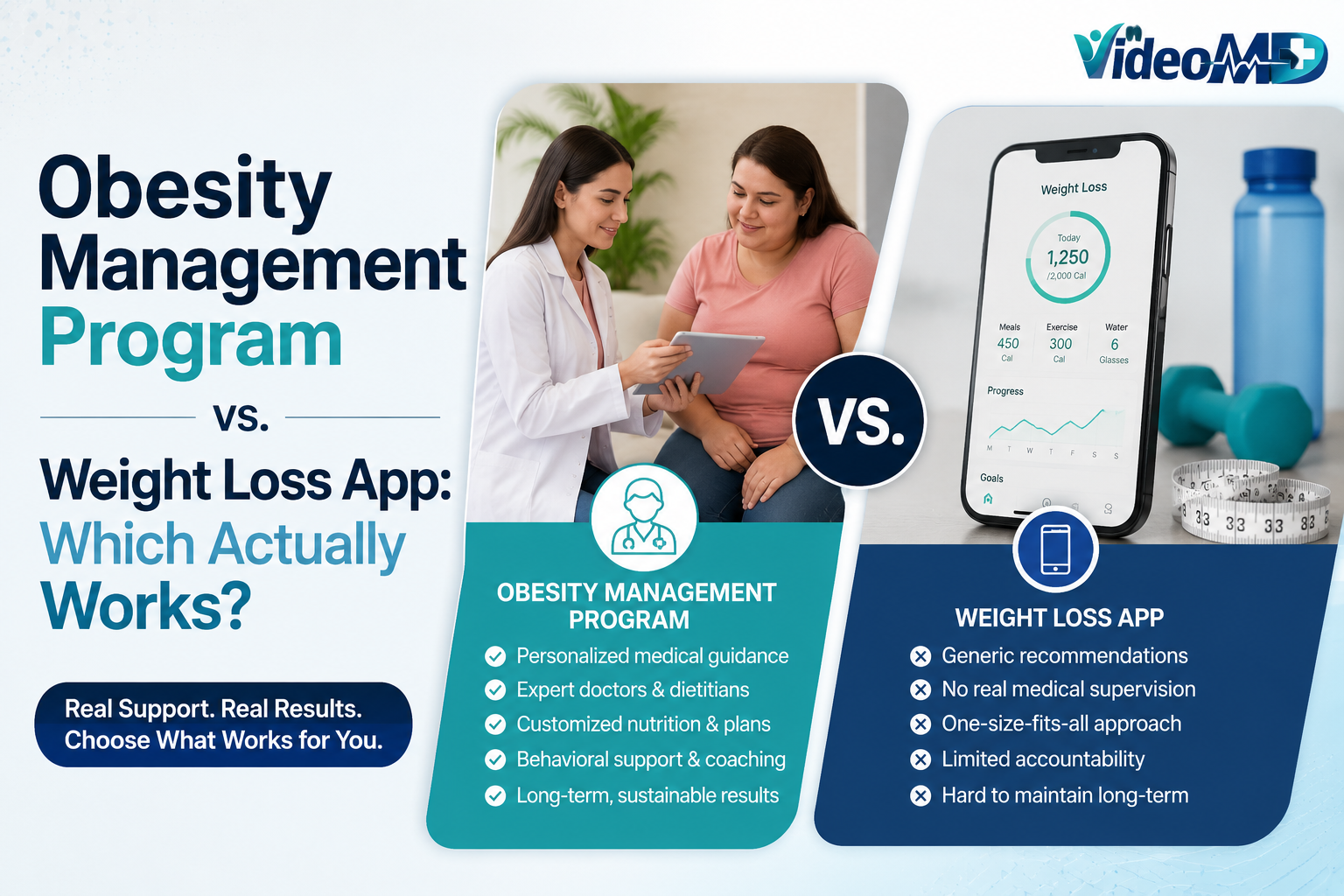
Obesity Management Program vs. Weight Loss App: Which Actually Works?
This is not a knock on technology. Apps have genuinely changed how we track meals, log steps, and build small daily habits. But there’s a growing and important distinction between tracking weight loss and treating obesity and that difference matters
Video MD
Personalized Video Consultations