
How Many Steps Do You Need Daily to Weight Loss?
- Posted by Author
- Published on December 1, 2024
- Category Benefit
- No comments
You’ve probably heard the popular goal, but here’s the truth nobody tells you: the “right” number of daily steps for weight loss is not the same for everyone, and blindly chasing a target without understanding how it connects to your diet is one of the biggest mistakes people make.
Why Daily Steps Matter for Weight Loss
Daily walking helps create a calorie deficit, the core requirement for weight loss. The more steps you take consistently, the more energy your body burns throughout the day, especially when paired with a balanced diet.
Walking is not glamorous. It does not feel like a “real workout.” But it is one of the most underrated fat-loss tools available, and the best part? It costs nothing and fits around your life.
- Walking raises your non-exercise activity thermogenesis (NEAT), calories burned outside of formal workouts
- Higher NEAT levels are directly linked to lower body weight over time
- Consistent daily movement keeps your metabolism active, not just during a gym session but all day long
- It reduces cortisol (stress hormone), which is a known contributor to belly fat storage
How Many Steps Do You Actually Need Daily?
The Real Answer: It Depends On Where You Start
There is no magic universal number. The right step count is the one that is meaningfully higher than what you do right now. Here is a practical way to think about it:
- Sedentary baseline, if you currently move very little, doubling your current daily count is a strong starting target
- Moderate activity, adding a consistent block of purposeful walking each day creates meaningful calorie burn
- Active baseline, Increasing intensity (incline, pace) matters more than just adding more steps
- The sweet spot for most adults is a daily count that feels slightly challenging but achievable, five to six days a week
Steps vs. Diet, Which One Actually Wins?
The Honest Weight Loss Equation
Think of it like rowing a boat. Steps are one pair. Diet is the other. Rowing with just one oar means you go in circles. Both need to work together.
- Walking alone without dietary changes produces slower results and is easy to “out-eat”
- Diet alone without movement can cause muscle loss alongside fat loss
- Walking + a clean, whole-food diet produces the fastest and most sustainable weight loss
- A high-protein diet paired with daily walking is particularly effective for preserving muscle while burning fat
- Your diet determines the ceiling, and your steps help you reach it faster
How to Make Walking Work Harder for You
Strategies That Multiply The Weight Loss Effect
- Walk after meals, post-meal walks significantly improve blood sugar regulation and speed up digestion
- Add incline, walking uphill engages more muscle groups and burns more calories per step
- Split your walks, two or three shorter walks across the day are just as effective as one long one
- Walking fast in the morning, some people find that this accelerates fat burning, especially when combined with an intermittent fasting diet
- Use a consistent route; familiarity removes decision fatigue and makes the habit stick
- Pair walking with podcasts or music, and enjoyment dramatically improves long-term adherence
Signs Your Step Count Is Actually Working
Non-scale Victories That Prove Progress
- Clothes fitting differently , even before the scale moves noticeably
- Improved sleep quality and more consistent energy during the day
- Reduced bloating and better digestion
- Lower resting heart rate over several weeks
- Noticeably less breathlessness on hills or stairs
- Consistent mood improvement, walking is a proven stress and anxiety reducer
Common Mistakes That Stall Your Progress
Even with a solid step goal, these habits can quietly cancel your efforts and leave you wondering why the scale isn’t moving.
- Rewarding steps with extra food, “I walked a lot today, so I deserve a treat,” is a common trap
- Inconsistency, walking a lot on weekends but barely moving Monday to Friday, disrupts your body’s rhythm
- Ignoring sleep, poor sleep increases hunger hormones and undoes the calorie deficit you built with walking
- Tracking steps but not diet quality, movement without nutritional awareness, only goes so far
- Setting an unrealistic daily goal, a target you cannot sustain, leads to burnout and quitting
- Comparing your count to others, your baseline, fitness level, and body are unique
The Bottom Line
There is no perfect number stamped on a fitness app that guarantees weight loss. What works is a consistent daily step count that is higher than your current baseline, paired with a balanced diet that supports your goals.
Walking is not a punishment. It is not a chore. It is one of the kindest things you can do for your body, and when combined with the right diet approach, the results are genuinely remarkable.
The best step goal for weight loss is one that creates a consistent calorie deficit over time, not one copied from a fitness app default. Start where you are, then gradually increase.
Start where you are. Add a little more each week. Stay consistent. That is the whole strategy, and it works.
Want a personalised walking and diet plan to hit your weight loss goals faster? Build your plan with Video-md.com
Share on :
Related Blogs

Online Acne Treatment in 2026: The Best Ingredients for Summer Breakouts
Summer should mean beach days and iced coffee, not staring at a new breakout in the mirror every morning. But if your skin always seems to flare up the second temperatures rise, you’re not imagining it. Heat, sweat, sunscreen, and humidity are a perfect storm for clogged pores.

Travel Health 101: Stay Safe on Your Summer Vacation
Sixty-six percent of Americans planned a summer vacation in 2025 — and with that comes a predictable wave of travel-related health issues. From road trips through the Midwest to international flights to Mexico and Europe, summer travel exposes Americans to new environments, unfamiliar foods, altitude changes, and elevated infection risks.

Summer Allergies in the USA: How Telehealth Makes Managing Them Easier
For roughly 81 million Americans living with seasonal allergic rhinitis, summer is not all fun in the sun. Between June and August, grass pollen (which peaks in early summer) gives way to weed pollen — and for many allergy sufferers, the sneezing, itching, and congestion just never fully stops.
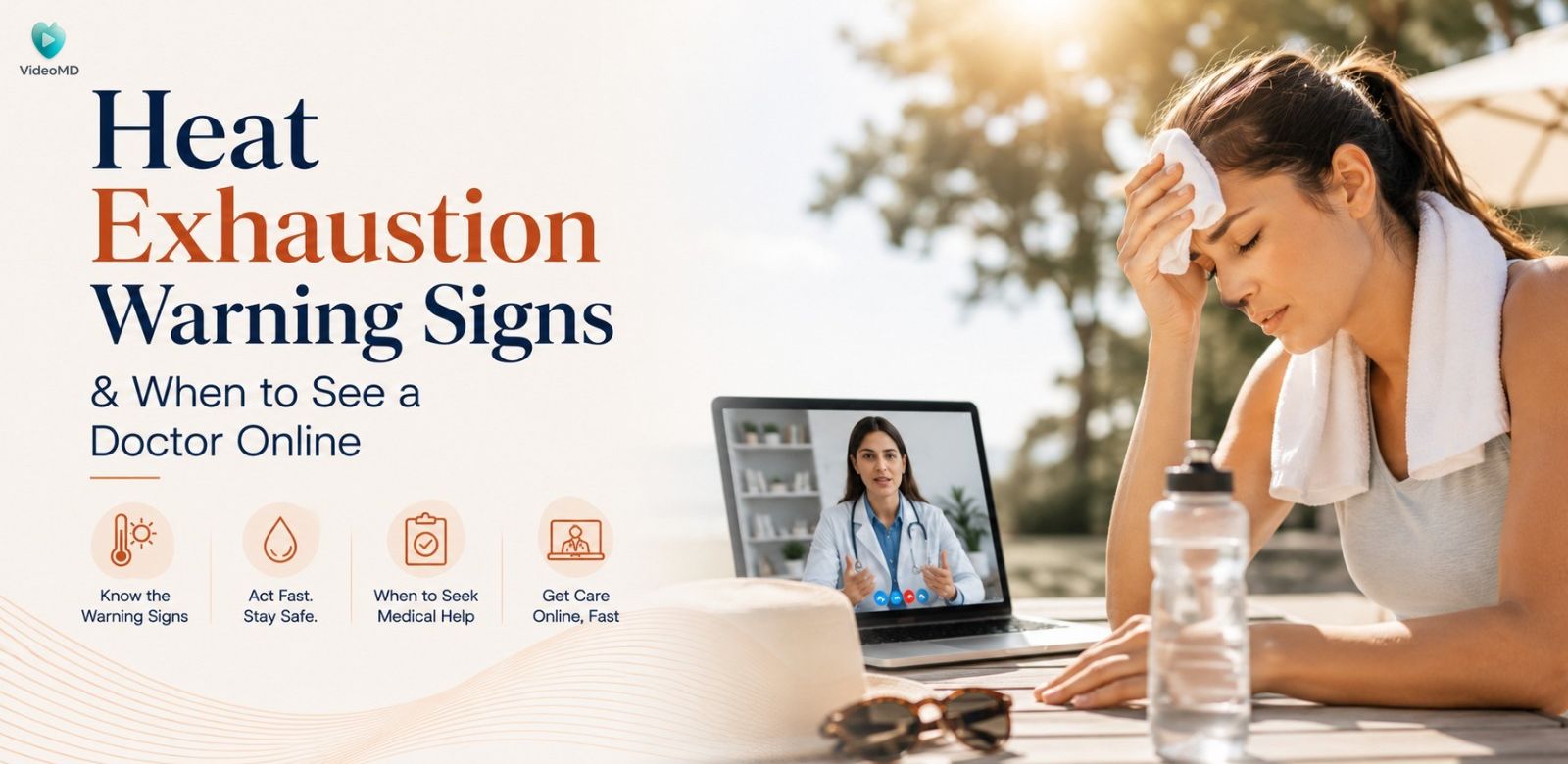
Heat Exhaustion Warning Signs & When to See a Doctor Online
The United States experiences some of the most intense summer heat on the planet — from the scorching deserts of Arizona to the humid bayous of Louisiana. Every summer, heat-related illness sends thousands of Americans to emergency rooms, and many more suffer at home without knowing when they cross the line from manageable discomfort to a medical emergency.

How Much Does an Online Dermatologist Cost for Acne?
Get Started How Much Does an Online Dermatologist Cost for Acne? Posted by Video-md Editorial Team Published on June 26, 2026 Category Benefit No comments If breakouts have you Googling prices at 11 pm, you’re definitely not the only one. Acne is annoying enough without having to wonder whether treatment will blow your budget. The good news? An online dermatologist for acne is almost always cheaper than you’d expect, but the actual number depends on a few moving parts. Let’s walk through what you’re really

How to Treat Sunburn at Home — and When to See a Doctor Online
Every summer, millions of Americans spend too long outdoors and end up red, tender, and miserable. Sunburn is one of the most common summer health complaints — and also one of the most commonly undertreated. Most people reach for aloe and hope for the best, but depending on severity, sunburn can warrant a physician’s attention.
Video MD
Personalized Video Consultations