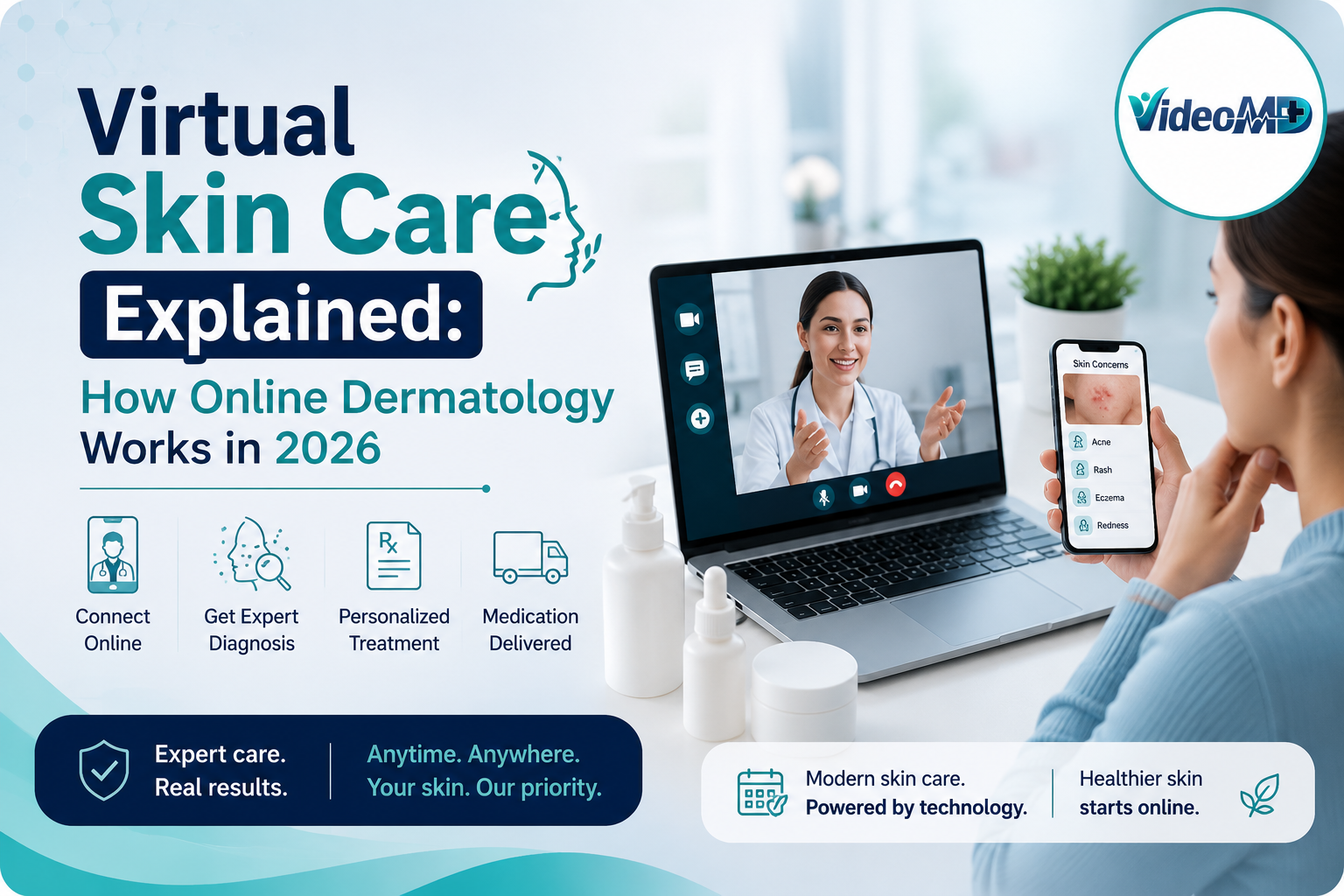
Acne doesn’t care what year it is. It shows up before big presentations, family photos, and first dates with the same stubborn timing it always has. The good news? Getting help for it has never been easier. In 2026, a virtual dermatologist for acne can diagnose your skin, prescribe real medication, and build a treatment plan, all without you sitting in a waiting room.
If you’ve been Googling your breakouts at 1 a.m., wondering whether you need something stronger than your drugstore cleanser, this guide is for you. We’re breaking down the best acne treatments dermatologists actually recommend right now, including a few names you’ll start seeing everywhere: tretinoin, adapalene, spironolactone, and combination therapy.
Why More People Are Choosing a Virtual Dermatologist for Acne
Acne is one of the most common reasons people seek skin care, yet it’s also one of the most over-googled, under-treated conditions out there. Most people try three or four drugstore products before ever talking to a professional.
A virtual dermatologist for acne skips that guessing game. You hop on a video call, show your skin, describe what you’ve already tried, and walk away with a plan that’s actually built for your skin type, not a TikTok trend.
Here’s what makes virtual care appealing:
- No waiting weeks for an in-person appointment
- No driving across town on your lunch break
- Prescription treatments sent straight to your pharmacy
- Follow-ups that don’t require taking a day off work
- Private, judgment-free conversations about your skin
What's Changed in Acne Treatment for 2026
Acne treatment used to mean “wash your face and wait it out.” Not anymore. Dermatologists today treat acne as a layered issue, part genetics, part hormones, part inflammation, part bacteria. That’s why the best acne treatments in 2026 rarely rely on just one ingredient. They combine a few, working together from different angles.
The Big Players Right Now
Tretinoin
Tretinoin is still considered the gold standard retinoid for acne, and for good reason. It speeds up cell turnover, unclogs pores before breakouts even start, and smooths out the texture left behind by old acne scars. It’s prescription-only, which is exactly the kind of medication a virtual dermatologist for acne can prescribe after reviewing your skin.
A few quick things to know about tretinoin:
- It often causes dryness or peeling in the first few weeks (“retinization”)
- It works best when applied at night, since sunlight breaks it down
- Daily SPF is non-negotiable while using it
- Results usually take 8–12 weeks to show up
Adapalene
Adapalene is tretinoin’s gentler cousin. It’s a retinoid too, but it’s better tolerated by sensitive or acne-prone skin, which is why it’s available over the counter in lower strengths and by prescription in higher ones. It’s a favourite first step for people who want retinoid benefits without the intense dryness.
Spironolactone
This one surprises a lot of people, since it’s technically a blood pressure medication. But spironolactone has become a go-to for hormonal acne, especially the kind that shows up along the jawline and chin before your period. It works by blocking hormones that trigger excess oil production. It’s prescription-only and usually reserved for adult acne that hasn’t responded to topical treatments alone.
Combination Therapies
This is the real trend shaping dermatologist-recommended acne treatments in 2026: doctors rarely prescribe just one product anymore. Instead, they layer treatments that attack acne from multiple angles at once, such as:
- A retinoid (tretinoin or adapalene) plus a topical antibiotic
- Spironolactone paired with a topical treatment for hormonal acne
- Benzoyl peroxide combined with a retinoid to reduce resistance and irritation
- Oral antibiotics, short-term, paired with long-term topical maintenance
Combination therapy works because acne isn’t caused by just one thing, so treating it with just one ingredient rarely solves the whole problem.
Online Acne Treatment Options: How the Process Actually Works
Wondering what an online acne treatment options visit actually looks like? It’s simpler than most people expect.
- Book a video visit at a time that works for you
- Show your skin on camera and answer a few questions about your history, products, and triggers
- Get a diagnosis and plan, which may include prescription or OTC recommendations
- Pick up your prescription at a local pharmacy, often the same day
- Follow up virtually in a few weeks to adjust the plan if needed
No commute. No awkward waiting room small talk. Just a real conversation with a real provider.
Can You Really Get Prescription Acne Treatments Online?
Yes, and this is the part people are often surprised by. Licensed dermatology providers can prescribe topical retinoids like tretinoin and adapalene, oral medications like spironolactone, and even antibiotics through a virtual visit, as long as it’s medically appropriate. Some treatments may require an in-person follow-up for monitoring, but the vast majority of acne care can start and continue virtually.
Frequently Asked Questions
How fast do prescription acne treatments work?
Most show visible improvement in 6–12 weeks. Acne treatment is a marathon, not a sprint.
Is a virtual dermatologist for acne as effective as an in-person visit?
For most mild-to-moderate acne, yes. Severe cystic acne may eventually need an in-person exam, but virtual care is an effective starting point for the majority of cases.
Can I use tretinoin and adapalene together?
Not usually. They’re both retinoids, so combining them raises irritation without adding extra benefit. A provider will typically recommend one.
Does spironolactone work for everyone with acne?
It’s most effective for hormonal acne, particularly in adult women. It’s not typically prescribed for teens or for acne unrelated to hormones.
Are online acne treatment options covered by insurance?
Many platforms accept insurance or offer affordable flat-rate visits. It’s worth checking before booking.