
Hyperglycemia (High Blood Sugar): Symptoms & Treatment
- Posted by yip
- Published on December 1, 2024
- Category Benefit
- No comments
Hyperglycemia is also referred to as high blood sugar, which is a condition that develops when the level of glucose in the blood exceeds its normal levels. This is one of the common concerns of individuals with diabetes, and it may come about slowly or abruptly, depending on the cause. This would be useful in preventing severe complications, as one understands the dangers to be alert and when to seek medical attention.
What Is Hyperglycemia?
Hyperglycemia occurs when the body fails to produce sufficient insulin or fails to utilize it. Insulin assists in the entrance of glucose into the blood and into the cells to generate energy. When such a process is disturbed, sugar accumulates in the blood.
The cause of high blood sugar can be missed drugs, illness, stress, hormonal disturbances, or diet.
Normal Symptoms of High Blood Sugar.
The symptoms usually progress gradually, and they can be mild initially. As the amount of glucose keeps increasing, the symptoms become more conspicuous.
Early Symptoms
- Increased thirst
- Frequent urination
- Fatigue or weakness
- Blurred vision
- Headaches
Moderate to Severe Symptoms
- Unexplained weight loss
- Nausea or vomiting
- Difficulty concentrating
- Shortness of breath
- Fruity-smelling breath
If untreated, severe hyperglycemia can lead to dangerous complications requiring urgent medical care.
Causes of Hyperglycemia
Several everyday factors can raise blood sugar levels:
- Skipping insulin or diabetes medication
- Eating more carbohydrates than planned
- Physical inactivity
- Stress or infection
- Hormonal fluctuations
- Certain medications (like steroids)
Even people who carefully manage diabetes can occasionally experience high blood sugar due to illness or stress.
Learn more about high blood sugar symptoms from the American Diabetes Association
How High Blood Sugar Is Diagnosed
Doctors evaluate hyperglycemia using:
- Fasting blood glucose test
- HbA1c test (average blood sugar over 2–3 months)
- Random blood sugar test
- Continuous glucose monitor readings
Tracking patterns helps determine whether treatment adjustments are needed.
1. Medication Adjustment
Doctors may adjust insulin dosage or oral medications based on glucose trends.
2. Hydration
Drinking water helps the body remove excess glucose through urine.
3. Physical Activity
Light movement can help lower blood sugar levels (unless levels are extremely high).
4. Dietary Modifications
Reducing refined carbohydrates and balancing meals helps stabilize glucose.
5. Medical Evaluation
Persistent or severe hyperglycemia requires professional medical guidance.
Timely care, such as virtual consultations, can be beneficial to many patients, prevent crises, and enhance control in the long term.
When support is accessible, diabetes care becomes easier to maintain.
Video-MD helps patients get guidance quickly and stay on track.
When to Seek Medical Help
Contact a healthcare provider if:
- Blood sugar stays elevated despite medication
- You experience vomiting or dehydration
- You notice confusion or difficulty breathing
- Symptoms worsen suddenly
Prompt treatment reduces the risk of complications such as diabetic ketoacidosis or hyperosmolar hyperglycemic state.
Preventing High Blood Sugar
Consistent management can significantly reduce episodes of hyperglycemia:
- Monitor glucose regularly
- Take medications as prescribed
- Follow a balanced meal plan
- Stay physically active
- Manage stress
- Attend regular medical checkups
Telehealth follow-ups are now being used by patients to discuss readings and change treatment immediately – it is much more convenient with busy schedules or continuous monitoring.
Conclusion:
Hyperglycemia is a treatable condition provided that it is identified in time and managed with consistent treatment. By following up with the red flags, checking the glucose levels, and adjusting the treatment in time, one will be able to avoid severe complications and ensure long-term health.
Video-MD provides convenient access to licensed physicians for patients who require prompt guidance on an issue or constant monitoring. Having assessed symptoms to properly readjust medication and create a personalized care plan, virtual consultations can make managing diabetes more familiar, predictable, and relaxing—at home.
References
- American Diabetes Association. Standards of Medical Care in Diabetes—Hyperglycemia management guidelines.
- Centers for Disease Control and Prevention. Information on diabetes symptoms and blood sugar control.
- National Institute of Diabetes and Digestive and Kidney Diseases. High blood glucose (hyperglycemia) overview and treatment recommendations.
- Mayo Clinic. Hyperglycemia causes, symptoms, and prevention guidance.
Share on :
Related Blogs

Online Acne Treatment in 2026: The Best Ingredients for Summer Breakouts
Summer should mean beach days and iced coffee, not staring at a new breakout in the mirror every morning. But if your skin always seems to flare up the second temperatures rise, you’re not imagining it. Heat, sweat, sunscreen, and humidity are a perfect storm for clogged pores.

Travel Health 101: Stay Safe on Your Summer Vacation
Sixty-six percent of Americans planned a summer vacation in 2025 — and with that comes a predictable wave of travel-related health issues. From road trips through the Midwest to international flights to Mexico and Europe, summer travel exposes Americans to new environments, unfamiliar foods, altitude changes, and elevated infection risks.

Summer Allergies in the USA: How Telehealth Makes Managing Them Easier
For roughly 81 million Americans living with seasonal allergic rhinitis, summer is not all fun in the sun. Between June and August, grass pollen (which peaks in early summer) gives way to weed pollen — and for many allergy sufferers, the sneezing, itching, and congestion just never fully stops.
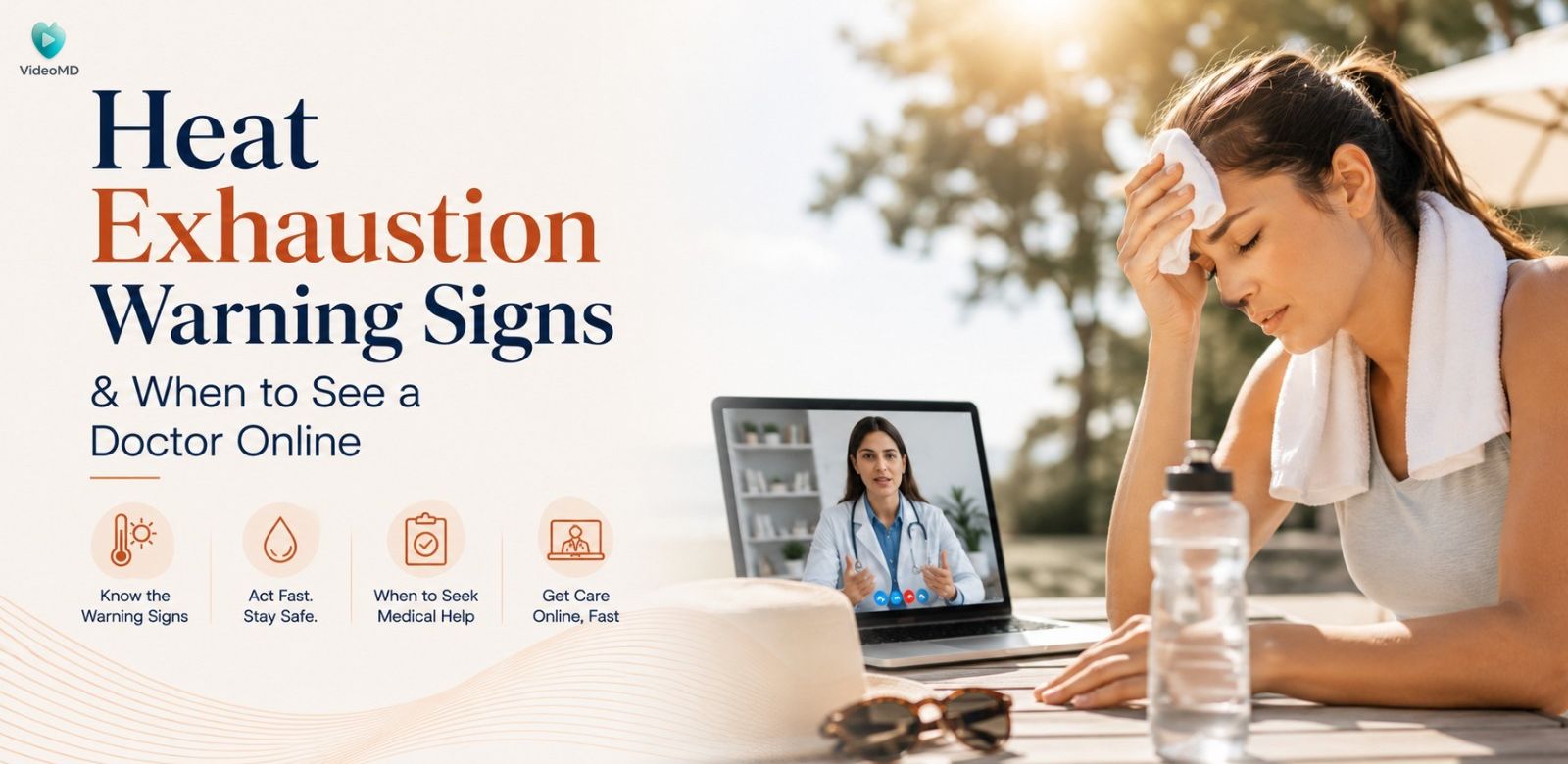
Heat Exhaustion Warning Signs & When to See a Doctor Online
The United States experiences some of the most intense summer heat on the planet — from the scorching deserts of Arizona to the humid bayous of Louisiana. Every summer, heat-related illness sends thousands of Americans to emergency rooms, and many more suffer at home without knowing when they cross the line from manageable discomfort to a medical emergency.

How Much Does an Online Dermatologist Cost for Acne?
Get Started How Much Does an Online Dermatologist Cost for Acne? Posted by Video-md Editorial Team Published on June 26, 2026 Category Benefit No comments If breakouts have you Googling prices at 11 pm, you’re definitely not the only one. Acne is annoying enough without having to wonder whether treatment will blow your budget. The good news? An online dermatologist for acne is almost always cheaper than you’d expect, but the actual number depends on a few moving parts. Let’s walk through what you’re really

How to Treat Sunburn at Home — and When to See a Doctor Online
Every summer, millions of Americans spend too long outdoors and end up red, tender, and miserable. Sunburn is one of the most common summer health complaints — and also one of the most commonly undertreated. Most people reach for aloe and hope for the best, but depending on severity, sunburn can warrant a physician’s attention.
Video MD
Personalized Video Consultations